
Learn. Prevent. Empower.
Asthma
Learning outcomes:
-
To understand what asthma is, including its causes, triggers, and symptoms
-
To learn how to recognize signs of an asthma attack and assist a casualty with medication (inhaler use)
-
To know when to call for emergency help and how to monitor or resuscitate the casualty if needed
Learning content:
Learning outcomes:
-
To understand what asthma is, including its causes, triggers, and symptoms
-
To learn how to recognize signs of an asthma attack and assist a casualty with medication (inhaler use)
-
To know when to call for emergency help and how to monitor or resuscitate the casualty if needed
Learning content:
What is Asthma?
Asthma is a chronic condition that causes difficulty in breathing due to spasms of the muscles in the air passages (bronchi and bronchioles). During an asthma attack, these airways become narrowed and inflamed, making it hard to breathe.
Causes & Triggers
Environmental Triggers
-
Cold air
-
Pollen
-
Cigarette smoke
-
Perfumes and strong odors
Occupational Exposures
-
Dust
-
Fumes
-
Industrial smoke
*In some cases, no clear trigger is identified. There is not much need to identify the trigger unless it is obvious.
Recognition of an Asthma Attack
Look for these signs to identify a possible asthma emergency:
-
Wheezing (whistling breath sound)
-
Shortness of breath; can’t speak full sentences
-
Chest tightness or coughing
-
Exposure to known triggers (exercise, allergens, cold air, etc.)
-
History of asthma; carries inhaler
Check the 5 Rights Before Administering an Inhaler
-
Right Patient: Confirm the inhaler belongs to the casualty (check name on prescription).
-
Right Medication: Use the correct reliever inhaler (commonly salbutamol, e.g. Ventolin).
Note: The casualty may have multiple inhalers (preventive and reliever). Use the reliever.
-
Right Dose: Follow the Asthma Action Plan if available. If not:
-
Give 1 puff every minute
-
Up to a maximum of 8 puffs
-
-
Right Time: Confirm the casualty is currently experiencing an asthma attack based on observed signs and symptoms.
-
Right Route: Administer via inhalation.
Actions to Take
-
Place the casualty in a comfortable position, usually sitting upright.
-
Encourage slow, deep breathing to reduce panic and help airflow.
*Ensure fresh air is available (open windows or doors).
-
Ask if the person has asthma medication. This is typically a blue reliever inhaler.
-
Assist with using a Metered Dose Inhaler (MDI) — with or without a spacer.
-
Follow the person’s Asthma Action Plan if available.
If the attack does not improve after 3 puffs:
-
Immediately call the emergency number!
-
Monitor the casualty continuously
If the casualty becomes unresponsive and stops breathing:
-
Begin CPR immediately
-
Use an AED if available
Types of Inhalers
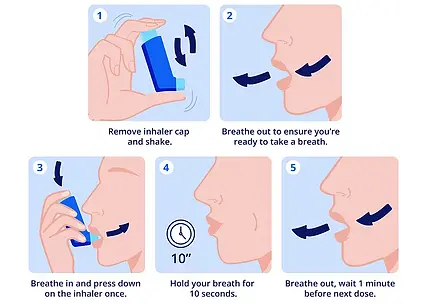
Direct Metered Dose Inhaler (MDI) Use
-
Remove the cap and shake the inhaler well
-
Instruct the casualty to exhale deeply
-
Seal their lips around the inhaler’s mouthpiece
-
Press the canister to release one puff while
inhaling deeply
-
Ask them to hold their breath for about 10 seconds
MDI with Spacer (especially for children or those struggling to coordinate)
-
Insert the inhaler into the spacer.
-
Place the mouthpiece (or mask for young children) securely over the mouth
-
Administer 1 puff into the spacer
-
Breathe normally for 6 breaths through the spacer
-
If more puffs are prescribed:
-
Wait 1 minute between each puff
-
Repeat until up to 8 puffs maximum
-
Key Points to Remember
-
Never lay the person flat — always sit them up during an attack
-
If the inhaler is not available, seek emergency help immediately
-
If the person becomes unresponsive, treat it as a medical emergency. Begin CPR if no breathing is present.
Questions:
Please access the questions via this link: https://forms.gle/tvtSvos7kJcrUS9r7




Key Pointers:

Recognize an Asthma Attack
-
Most common sign and symptom for asthma is wheezing with breathlessness.
-
Casualty will usually have past medical history of asthma and an inhaler.