
Learn. Prevent. Empower.
Allergy / Anaphylaxis
Learning Outcomes:
-
Define allergies and anaphylaxis, and identify common allergens.
-
Recognise symptoms of mild, moderate, and severe allergic reactions.
-
Apply appropriate first aid actions, including use of epinephrine auto-injectors.
-
Respond to anaphylactic shock and perform CPR if necessary, while awaiting emergency help.
Lesson Content:
What are Allergies?
An allergy is the body’s overreaction to a normally harmless substance, triggered by the immune system mistaking it as a threat. These substances are called allergens, and they can include:
-
Dust mites
-
Pollen
-
Certain foods
-
Medications
-
Insect stings
In some people, allergies can cause mild discomfort, while in others they may trigger life-threatening reactions like anaphylaxis.
How Allergies work
The immune system typically fights harmful invaders like viruses and bacteria by producing antibodies. In allergic individuals, the body produces antibodies in response to harmless substances (e.g. pollen), treating them like dangerous invaders.
First exposure may cause no reaction. Subsequent exposure may trigger symptoms like hives, swelling, or even difficulty breathing.
What is Anaphylaxis?
Anaphylaxis is a severe and potentially fatal allergic reaction that affects breathing and blood circulation. It can develop within seconds to minutes after exposure to an allergen.
Recognition of Allergic Reactions
Mild to Moderate Allergic Reactions
-
Local or widespread red, blotchy rashes
-
Swelling of the face, lips, or neck
-
Puffiness around the eyes
Severe Allergic Reactions (Anaphylaxis)
-
Difficulty breathing, or tight chest
-
Swollen tongue, hoarse voice, difficulty swallowing
-
Dizziness, confusion, or fainting
-
May become unconscious and stop breathing
Actions to take for Allergic Reactions
Before administering inhaler, you can run through the 5 rights in your head:
-
Patient: the prescription has the casualty’s name on it
-
Medication: epipen (adrenaline) (Figure 3.1)
-
Dosage: 1 pen
-
Time: ensure that the casualty is in fact having an allergic reaction based on the signs and symptoms
-
Route: intramuscular route (inject it at the outer thigh). (Table 3.1)
For casualties suspected to have anaphylaxis, they might go into anaphylactic shock. To treat anaphylactic shock:
-
Loosen Tight Clothing
-
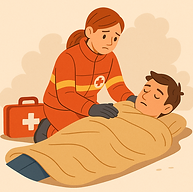
Keep the casualty warm with a blanket
-
Do not give food or drinks
-
If Unresponsive and Not Breathing
-
Start chest compressions immediately
-
Use an AED if available
Important Reminders
-
Always call the ambulance (even if symptoms improve, the reaction may return later)
-
Do not delay — anaphylaxis can be fatal if not treated promptly.
-
Epipen save lives — ask for consent and assist quickly if the person cannot self-administer.
-
Never leave the casualty alone, and monitor their vital signs while waiting for medical help.


Table 3.1
Questions:
Please access the questions via this link: https://forms.gle/6wfuX2oWuS4kmmES6
