Learn. Prevent. Empower.
Choking
Learning Outcomes:
-
Define choking and its common causes
-
Recognise signs of partial vs complete obstruction
-
Perform abdominal/chest thrusts appropriately
-
Manage unconscious choking with compressions and emergency help
Lesson Content:
Choking happens when the airway becomes blocked, stopping air from reaching the lungs. A complete airway obstruction can lead to death within minutes if not treated immediately.
Causes
Intrinsic Causes: These occur within the body and are especially dangerous in unconscious individuals.
-
Tongue falling backward into the pharynx when lying flat
-
Blood from facial/head injuries entering the airway
-
Regurgitated stomach contents (e.g., during vomiting) entering the windpipe
Extrinsic Causes: These are foreign objects that block the airway: (Table 1.1)
-
Food (especially poorly chewed meat)
-
Dentures
-
Small toys or other objects (especially in children)
Recognition of Airway Obstruction
Partial Obstruction (Mild)
-
Person can still breathe or cough
-
May hear wheezing or gagging
-
Allow them to cough – it's the body's natural way to expel the object
-
DO NOT interfere unless the situation worsens
Complete Obstruction (Severe)
-
Cannot speak, cough, or breathe
-
May show cyanosis (bluish skin, lips, fingernails)
-
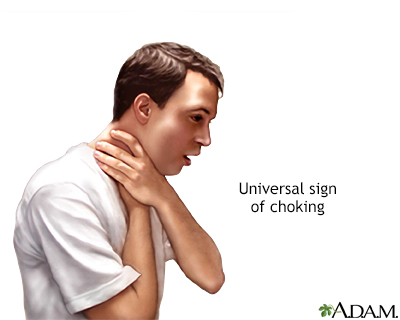
Makes the universal choking sign: clutching the throat with both hands
-
Requires IMMEDIATE action
Actions to take
There are two primary techniques used to relieve FBAO (Foreign Body Airway Obstruction). (Table 1.2)
-
Abdominal Thrusts (Heimlich Maneuver)
-
Chest Thrusts (for pregnant or obese individuals)
Before performing any thrusts:
-
Ask the person if they are choking
-
A person with complete obstruction will not be able to speak, breathe, or cough, but may nod or show the universal choking sign (clutching the throat).
-
If they can cough, encourage them to keep coughing forcefully — don’t intervene unless the cough becomes ineffective.
Continue abdominal/chest thrust until:
-
The object is expelled, OR
-
The casualty becomes unconscious
Unconscious Choking Casualty
If a choking person becomes unresponsive, it means their airway is still blocked and oxygen is no longer reaching the brain. Immediate CPR-like action is required to clear the obstruction and restore breathing.
1. Gently lower the casualty to the ground
-
Ensure they are lying flat on their back on a firm surface
2. Call for help
-
Call the emergency line number
-
Ask someone to bring an AED if visible and nearby
3. Start Chest Compressions Immediately
-
Locate the same spot as for CPR (center of chest, lower half of sternum)
-
Perform 30 compressions at a rate of 100–120 per minute
-
Push hard and fast (about 5–6 cm deep for adults)
4. After 30 compressions, look inside the mouth
5. If you can see the object, carefully remove it
6. DO NOT do a blind finger sweep – this may push the object deeper
7. Repeat the cycle
-
Continue doing 30 compressions, then checking the mouth
8. Repeat until:
-
The foreign body is expelled
-
The casualty starts breathing, coughing, talking, or moving
-
Professional help arrives and takes over

Table 1.2
Questions:
Please access the questions via this link: https://forms.gle/61T9ncYLXUn1cwYg9