
Learn. Prevent. Empower.
Sprains and Strains
Learning Outcomes:
-
Differentiate between a sprain (ligament injury) and a strain (muscle/tendon injury).
-
Apply the four steps of the RICE (Rest, Ice, Compression, Elevation) procedure.
-
Understand what to avoid in the first 48 hours (Heat, Alcohol, Massage).
-
Recognize severe "red flag" symptoms (e.g., inability to bear weight, deformity) that require medical attention.
Lesson Content:
Definitions
A sprain is an injury to ligaments, which are the strong bands of tissue connecting bones at a joint.
A strain is an injury to muscles or tendons, which attach muscles to bones.
Causes
-
Twisting or wrenching a joint suddenly (e.g., ankle rolling)
-
Overstretching during sports or lifting heavy objects
-
Sudden impact or falls
Signs and Symptoms
-
Pain and tenderness around the injured area
-
Swelling and possible bruising
-
Difficulty moving or using the affected part normally
Actions to take
Use the acronym RICE:
Rest:
-
Stop using the injured area immediately to prevent further damage.
-
Support the area in a comfortable position.
Ice:
-
Apply a cold pack or wrapped ice to the injury for 15–20 minutes every 2–3 hours in the first 48 hours.
-
Do not apply ice directly to the skin.
Compression:
-
Wrap the area with an elastic or crepe bandage to help reduce swelling.
-
Ensure the bandage is firm but not so tight that it causes numbness or tingling.
Elevation:
-
Raise the injured limb above heart level as much as possible to reduce swelling.
-
Use pillows or folded blankets for support.
Additional Points
-
Avoid heat, alcohol, and massage during the first 48 hours, as these can increase swelling.
-
If severe pain, inability to bear weight, significant deformity, or numbness is present, seek medical attention.
-
After 48 hours, gentle movement and gradual return to activity are encouraged, as advised by a healthcare professional.
Key Reminders
-
Always assess circulation (capillary refill) beyond the injury after applying compression.
-
Reassure the casualty and monitor for increased pain or swelling.
-
Refer to medical care if you are unsure about the severity of the injury.
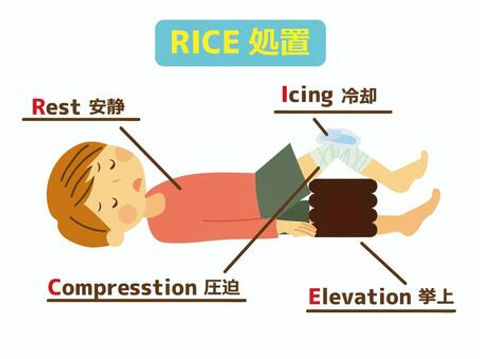
Key Pointers:

Apply the RICE method:
Rest, Ice, Compression, Elevation